
 At the end of August, I will be teaching a two-hour session that will introduce our first-year medical students to the principles of evidence-based medicine. Which means that I will be standing in front of 60 young adults for two hours, speaking. I have the material cold, and usually I can just stand in front of the audience and spout off what I have prepared until it’s over. But I can’t do that here – this is a class, and the students need to be learning. It’s the part where I have to speak well enough to get the students engaged with the material that’s making me nervous.
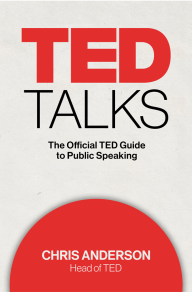
It’s no secret that some of the best talks in recent years have come out of TED. So when I saw a book at the library titled “TED Talks: The Official TED Guide to Public Speaking“, I couldn’t pass it up. The author, Chris Anderson, describes to the reader how to deliver an amazing, TED-worthy talk, covering everything from speaking tools, presentation tips, and delivery. Each important concept is supported by an exemplary TED talk, which makes it possible to find those talks online and see just what Anderson is talking about.
Perhaps the most useful tip for me, who has fallen into a rut of merely reciting my speeches, is to infuse your words with meaning. Anderson cites using volume, pitch, pace, timbre, tone, and prosody to inject variety into your voice and better catch the audiences’ interest. Obviously, this is something voice coaches have been teaching for ages, but reading it in this book struck a chord with me. I want to take my presentations to the next level, and I think paying more attention to how I’m sharing my ideas will get me there.
I highly recommend this book to anyone who speaks to an audience on a regular basis, whether it’s hundreds of people at a conference or five people at a workshop. I mean, who doesn’t want to give a talk worthy of TED?
 Kathryn Vela