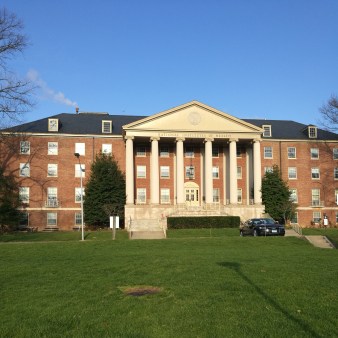
The final piece of the Biomedical and Health Research Data Management for Librarians course was a Capstone Summit at the NIH campus in Bethesda, Maryland. The students and mentors gathered to discuss their Capstone Projects and learn more about how to provide RDM services to their campuses. The meeting took place over one and a half days, and consisted of lectures, round-table discussions, and hands-on activities. It was great to finally meet the people I’d been conversing with over discussion posts and discuss the challenges we faced in RDM and the approaches we were attempting to overcome them.
I appreciated the mix of expertise at the Summit; while my classmates were people who were just starting to work with RDM services, our mentors had been working in this area for several years already (some had even written chapters or entire books about it). I’ve had past experiences where I would attempt to join a discussion group to learn more about a topic and find that everyone in the group was looking for more information as well. None of us had the expertise to provide any meaningful suggestions, so the discussion turned into more of a complaint meeting. But at the Summit, I was able to voice challenges and frustrations with my classmates and actually hear some helpful advice from experts in the field. It was one of the most productive learning experiences I’ve ever had.
The short Summit was a whirlwind of information and discussion, but here are some of the most important things that have stuck in my mind:
- There’s no one-size-fits-all approach to RDM services in the library. It’s important to be aware of both your own capacities and the RDM needs of researchers on your campus. You can learn from other institution’s approaches, but your services will ultimately need to reflect the unique needs of researchers on your campus. Some libraries have the capacity to provide RDM services throughout the data life cycle while others can only provide DMP consultations, and that’s okay.
- The library is ideally suited to work as a connection between different departments to provide comprehensive RDM services. A few departments may already be offering services related to RDM, but they are not coordinated in any helpful way. The library can act as a neutral party to connect these services and fill any gaps in RDM service.
- Find an advocate to help promote your RDM services. Having a researcher or administrator as a champion for your RDM services can go a long way towards encouraging your target audience to take advantage of them.
- There’s no need to reinvent the wheel. When it comes to educating researchers about RDM best practices, there are a number of existing resources that you can use to design workshops; you don’t need to create something from scratch. DataONE provides a suite of education modules that cover RDM throughout the data life cycle, including handouts and hands-on exercises. And the RDM Teaching Toolkit created by NYU librarians Kevin Read and Alisa Serkis provides materials for a one-hour introductory RDM workshop.
My Capstone Project (a needs assessment of RDM on my campus) is well underway; data collection should be completed in about two weeks. Once I have a better idea of what researchers on my campus need in terms of RDM services, I can finally get to work crafting an appropriate approach to RDM support from the library. Thanks to this course, I am finally starting to feel like I am an expert in this area, and that I can provide valuable assistance to researchers on my campus.
 Kathryn Vela
One response to “RDM Capstone Summit”
[…] attending the Biomedical and Health Research Data Management for Librarians course earlier this year, I have been working on launching research data services at my institution. The first step was […]
LikeLike